

How to Pay Attention and Care Deeply in a Chaotic World
Brad Stulberg and I dive into how to make progress, the power of rituals, and what it means to own your seat


If TIME Magazine had a feeling of the year, a top contender for 2026 would be overwhelmed.
It doesn’t matter your age, geography, or gender—everyone is feeling the effects of an increasingly chaotic world. The sheer volume of input is beyond our capacity to manage it.
And yet, most people have some semblance of the same goals: We want to live full and textured lives. We want to contribute and be useful. We want to throw ourselves into meaningful projects and pursuits. How to enact this sort of life is a timeless question. But it also feels particularly timely.
Which brings us to today’s post.
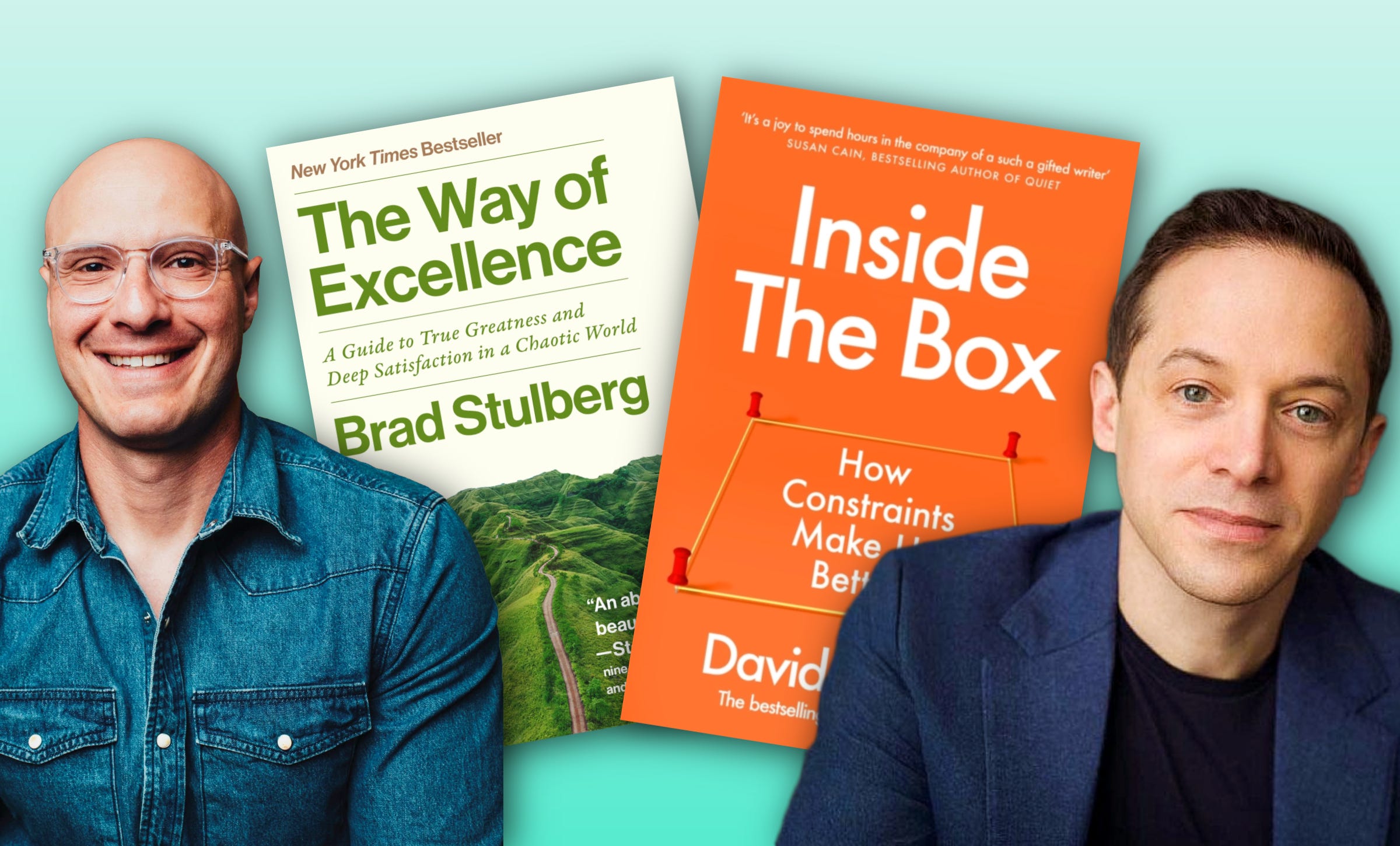
We, David and Brad, are interested in answering this question—for our readers and for ourselves (after all, you write the book you need). Brad’s new book, The Way of Excellence, came out in January and David’s latest, Inside the Box, in May. We’ve been hearing from people who have read both books, and have been told that they complement one another. It’s no surprise. The two of us are in conversation about these ideas constantly.
We wanted to bring some of that conversation to you, edited lightly for length and clarity.
How Do You Pay Attention In Today’s World?
Brad: The quality of your attention shapes the quality of your relationships, work, and leisure—which is to say the quality of your attention shapes the quality of your life. There’s been such a focus on “time management” over the past few decades, but in many ways, modern technologies are warping time. The internet, apps, A.I.—they all have this paradoxical relationship with time in which they compress it (what used to take hours or days can now be done in an instant) while at the same time giving you endless opportunities to fill it (you can spend your entire life interacting with a screen). So I don’t think time management is the right framework anymore. Rather, we need to be thinking about attention management.
Throughout the research and reporting process for The Way of Excellence I repeatedly found that the best performers across domains—sport, art, business, education, you name it—were extremely intentional about their attention. They set up systems and constraints (something you know all about!) to help them focus on what matters most. In essence, an excellent life requires designing micro-ecosystems that point you toward your goals instead of distracting you from them, which is what the default macro-ecosystem we all inhabit does really well. What are the objects you surround yourself with? Where do you place your smartphone when you are attempting to work hard on something? What types of media do you consume, books or TikTok? Who are the people you seek out? All of these decisions shape the frequency and strength of your attention.
David: Agreed, and I think it’s more important than ever to put a lot of explicit thought into how you use your attention. Nobel laureate Herbert Simon, whose work is all over Inside the Box, had this to say in 1970:
“In an information‑rich world, the wealth of information means a dearth of something else: a scarcity of whatever it is that information consumes. What information consumes is rather obvious: it consumes the attention of its recipients. Hence a wealth of information creates a poverty of attention.”
I think an unfortunate reality is that our attention has been trained by the firehose of information and feeds in a way that distracts us from meaningful activity. In Inside the Box I write about the work of psychologist Gloria Mark, who has shown that we now switch tasks at work every 45 seconds on average. It’s terrible both for productivity and stress. Plus, it trains your attention such that you have trouble calming your mind even when you aren’t working.
One way to push back is by “blocking” your work. Separating the workday into blocks of monotasking. You can do many different tasks over the day, but try to organize them differently to reduce toggling. The good news is that you can retrain your attention fairly quickly if you’re committed.
How Can Rituals Help Make A Chaotic World More Manageable?
Brad: The two major areas where rituals are most helpful are marking the passage of time and marking transitions between activities. In both cases, routine and ritual imbue with depth, meaning, and concreteness what otherwise might become shallow, trivial, and blurry.
You can mark the passage of time daily, weekly, seasonally, and annually. It could be as simple as lighting candles, making coffee or tea, journaling, or observing a sabbath; or as complex as a big camping trip or an entire week of solitude. It doesn’t matter so much what you do, just that you do something that creates a pause and backward step from the craziness of life, and that you do it with enough regularity that it takes on significance.
Marking transitions between activities could involve setting aside specific spaces for specific tasks, listening to music, brewing a fresh pot of coffee, and so on. What matters is that you find something that helps you gather yourself and bring intentionality to the important things in your life.
A big reason that routines and rituals have faded is because we live in a culture that is obsessed with short-term optimization and efficiency. Judged against this standard, routines and rituals make no sense. They are seen as wasted time, since they offer no direct or immediate productivity. When you execute a routine or ritual you do it for its own sake, and what you make—meaning and significance—isn’t measured by conventional dashboards. But when it comes to fulfillment and long-term performance, routines and rituals begin to look essential. They take you out of a frantic, frenetic, and frazzled attention economy and put you back in touch with what matters to you most.
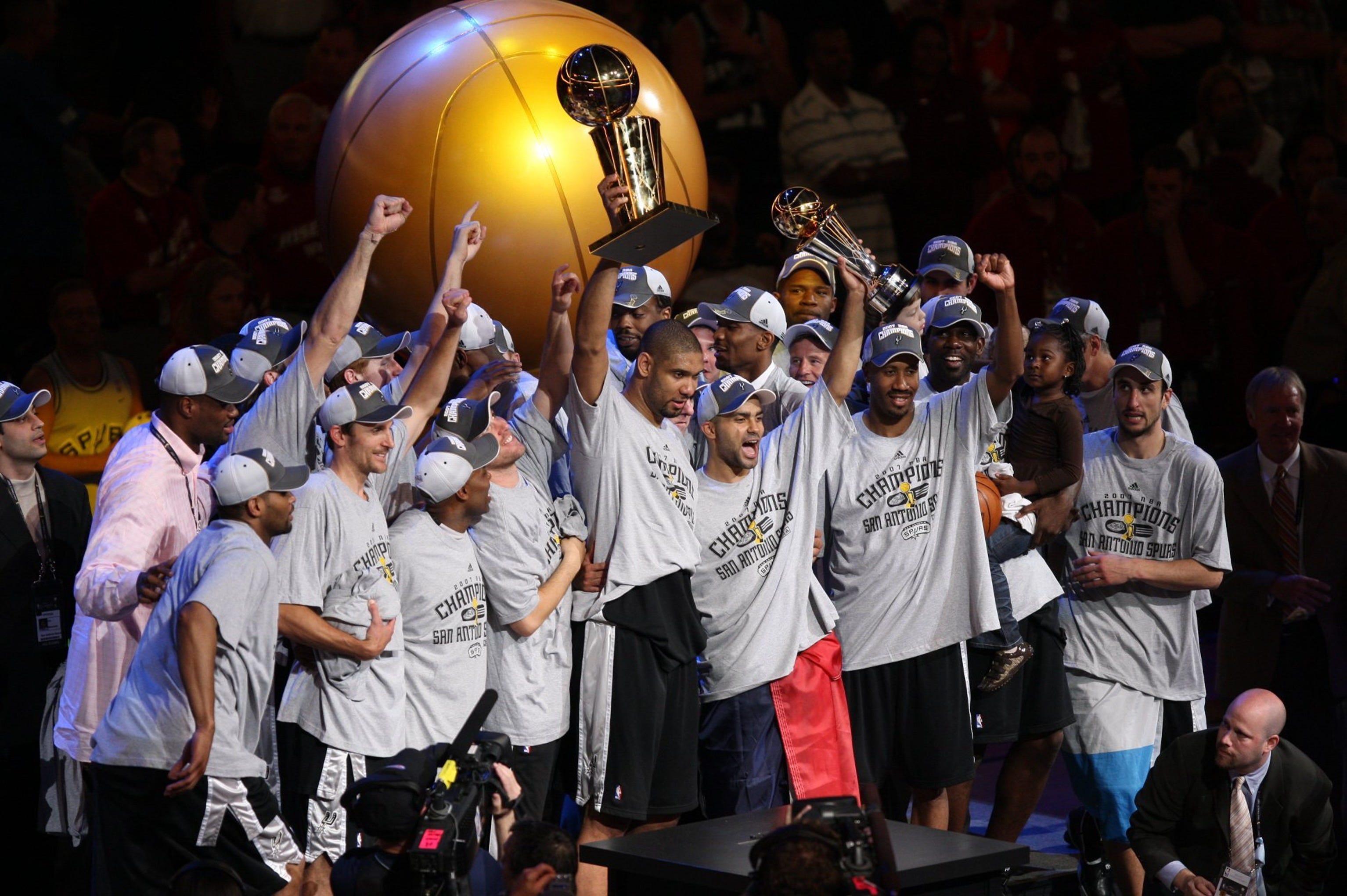
In the book I tell the story of the San Antonio Spurs and the organization’s epic team dinners. Here’s one of the winningest NBA teams in history taking hours out of road trips for highly-coordinated and planned team dinners. It seems crazy. And yet so many players and coaches credit those team dinners with helping the Spurs win championships, because they created an underlying foundation of trust throughout the team and a sense of meaning to the grind that is an 82-game NBA season.
David: I love that framing. The great cognitive psychologist Amos Tversky once said something along the lines of: If you don’t waste hours, you’ll end up wasting years. Ritual is almost always going to be inefficient, because it’s something you’ve committed to ahead of time that will get in the way of whatever short-term optimization you could be doing.
I want to highlight your “marking the transitions between activities” point. During my book reporting, I shadowed Isabel Allende, one of the greatest living writers. She published her first book when she was nearly 40, and since then has published a best seller about every 18 months on average for the last 44 years. Eighty million copies! And she has filled her life with ritual. She starts every book on January 8th (assuming the previous one is done); she has a ritual of cleaning out the remnants of the last project to prepare for the new one; she arranges a set of family photos on her shelf; she puts a Pablo Neruda book under her computer as a totem of inspiration. Her life “turned outward,” as she told me, ends, and she turns inward. All of these rituals are like a basketball player who claps and then takes three dribbles before a free throw—they become associated with getting in the headspace to do something meaningful. Those cues really begin to work if you stick with them.
All that said, it still takes Isabel time to get in the flow. She told me that once she turns inward, it still could be weeks before she writes anything she’s going to keep. She knows she just has to push through that inefficient but necessary phase.
What Is The Best Way To Explore New Territory?
David: Perhaps counterintuitively, a great way to explore new territory is to start with something old. Whether it’s a career transition or a creative project, we often think of doing something new or becoming someone new as if we’re Clark Kent rushing into a phone booth and emerging as Superman. But that isn’t the best way to go about it.
Let’s talk about creative projects first. The idea that creativity requires some flying leap of inspiration away from the past is basically a marketing trope that was invented in the late-18th-century Romantic period. It was a reaction to the Enlightenment, with its focus on logic and rationality. Prior to that, starting with something familiar was viewed as the ideal platform for exploration. That’s why Shakespeare was borrowing and occasionally borderline plagiarizing. His King Lear was at least the fiftieth version of the same story. His Romeo and Juliet was an adaptation of Arthur Brooke’s The Tragicall Historye of Romeus and Juliet. And, I mean, check this out. Here is Brooke’s Juliet:
Shall not the friar and my Romeus, when they come,
Find me, if I awake before, y‑stifled in the tomb?
And here is Bill Shakespeare’s Juliet:
How if, when I am laid into the tomb,
I wake before the time that Romeo
Come to redeem me? There’s a fearful point!
Shall I not then be stifled in the vault,
But that was OK. The point was to take familiar things and add a new spin, both because it’s a great way to get started, and because it helps others connect with the material.
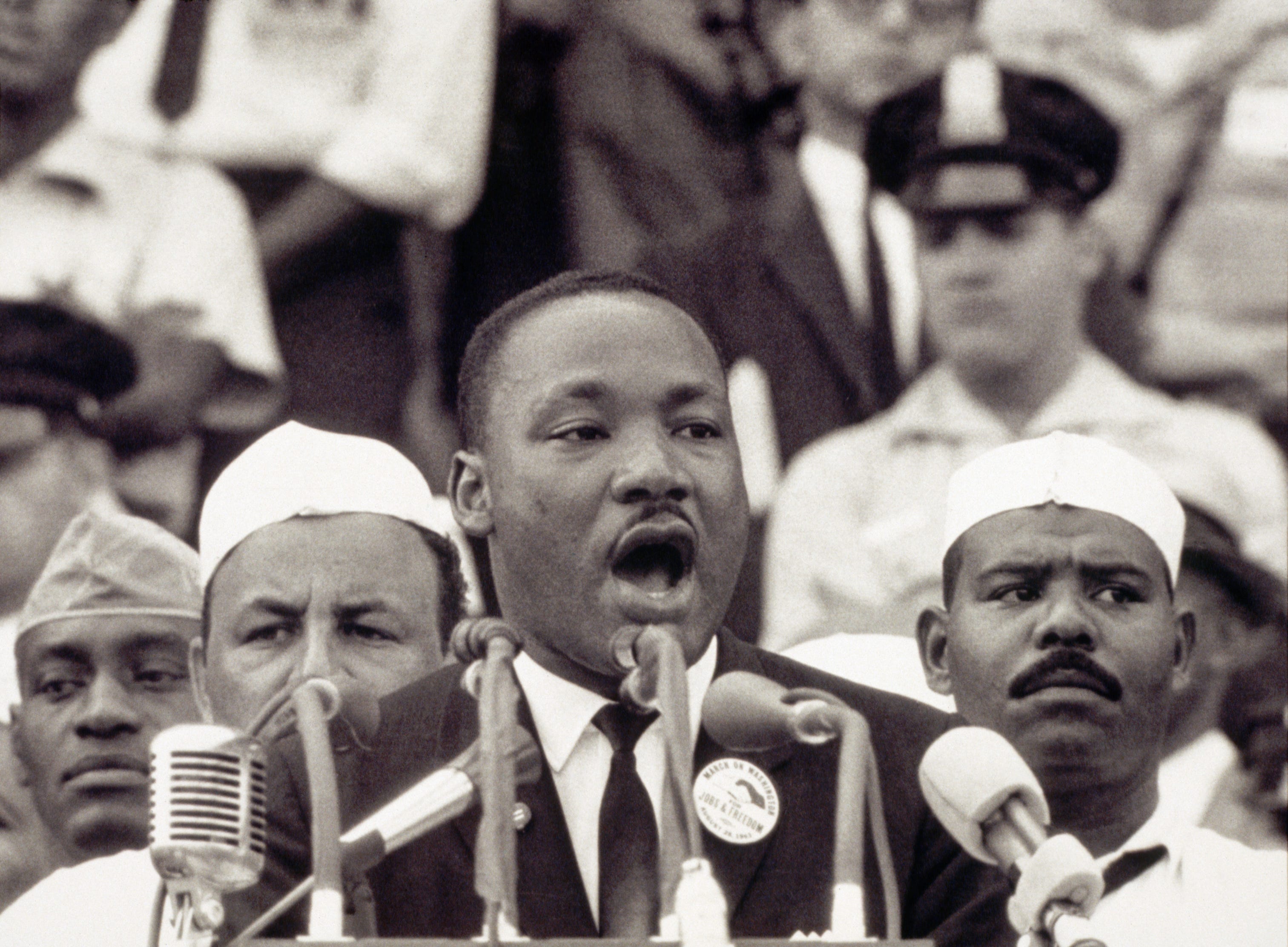
One of Martin Luther King Jr.’s most memorable quotes is etched into his memorial on the mall in Washington, D.C. It reads:
“Darkness cannot drive out darkness, only light can do that. Hate cannot drive out hate, only love can do that.”
Beautiful. That second line is King’s original creation, appended to the first, which is from a preacher named J. Wallace Hamilton. I think a message here is that if you want to explore, start by modifying something you already know well. Everything is a remix! And I think this works the same for career transitions. In Range, I wrote about London Business School professor Herminia Ibarra’s research, which found that successful transitions start very small, just branching out one small experiment at a time from something you’re already doing.
Brad: I couldn’t agree more, and this was one of my favorite parts of your book. I think a big fear for many people (myself included) is that you get pigeonholed into a certain area of focus, expertise, or even hobby. You become known for something, which makes it harder to leave that something behind, even if deep down inside you are ready. Researchers call this identity foreclosure. I think of pairing the old and familiar with the new and potentially uncomfortable as akin to creating a bridge. That bridge can be for other people, or even for yourself. Rather than make this abrupt transition you are enmeshing an old part of yourself, your ideas, or your work with something new. Sometimes you can jump across a river and make it to the other side, but if you can build a bridge you’re more likely to succeed.
Get Your Copy of the Books Today
In Brad’s Book There is a Chapter on Confidence and “Owning Your Seat.” What Does This Mean And How Do You Practice It?
Brad: Owning your seat simply means giving yourself the evidence that you belong, and then trusting that evidence. It is based on the premise that confidence comes from doing the work and putting in the reps. If you do the training, then you start to develop faith to trust that training. It’s not about being arrogant or thinking you are invincible. It is, however, about realizing that you stand on a body of work, and life experience, and the more you amass of each the more you can firmly own your seat, while still acknowledging that there will always be so much more to learn.
The best performers still harbor doubts and insecurities. It’s a part of human nature. You can either go through the motions and be superficially cool (but actually boring) or you can step into the arena, lay it on the line, care deeply, make yourself vulnerable, and fully live your one and only life. The latter gets just a bit easier when you give yourself the evidence, but it’s still a shift in attitude. It’s one worth making because you are never going to be the best at anything, including the best version of yourself, unless you start to own your seat.
David: I loved that part of your book. I included more of myself in Inside the Box than in my previous books. And I’m self-conscious about that, but it seemed in the past—to your point about evidence—that readers didn’t only want my reporting on scientific studies, they were also interested in some of my opinions about that research or how I translate it into my own life. So I shared more of that. I was still self-conscious about it, though. But reading that part of your book actually led me to share more personal stories and takeaways on podcasts or at live events. I think it led me to look for that evidence a little more, and then to believe it.
In Inside the Box, David Writes About the Power of Identifying a Bottleneck or Sticking Point as a Way To Unlock Progress. Can You Give An Example From Your Own Life?
Brad: Yes! I love to deadlift. It’s such a beautiful and simple movement, but it’s also really hard, especially as you get stronger. I got to a point where I could comfortably get over 500 pounds moving off the floor, but would struggle to finish the lift—what is known as the “lockout”—at any weight over 520 pounds. I worked with my coach to identify what was preventing me from locking out, which, to be honest, is an ongoing experiment. But where we’ve landed over the last six months is that my bracing and core position off the floor (at the bottom of the lift) isn’t strong enough, which then upends what happens at the top of the lift (the lockout). So now the experiment is how can we improve that single dimension of the lift, what happens at the floor, and by doing so, improve the overall movement. It’s a mix of specific strengthening exercises, neuromuscular skill development, and mindset changes.
Time will tell if it works, but this is precisely what makes training so fun! It’s an endless exploration of identifying sticking points, running experiments, and trying to figure out how to improve a complex system.
David: That’s a great example. We often default to adding new things to solve problems, when identifying the bottleneck or sticking point is the best way to focus your energy. After writing about this topic—the “theory of constraints,” in which you look for bottlenecks—I started to see the world through bottleneck-tinted glasses. And I’ll give a simple example that’s relevant to this medium we’re using right now: At one point, I was posting very infrequently on my newsletter. It didn’t make much sense given that I always had a number of drafts in progress. But as I was reading theory-of-constraints case studies, it was often the case that having a lot in progress was exactly what would slow down work at some stage of production and create a bottleneck. Too much toggling and starting new things meant everything was done worse and more slowly. One of the teams I wrote about implemented a rule: “Stop starting and start finishing.” You can’t start a new one until you finish one that’s already in progress. It massively boosted the amount of work they got done, and made them feel less frantic. So I implemented that for my newsletter—can’t start a new draft until the open one is done. It means I have a lot less work in progress, but it has led to actually getting more posts out the door.
A Part of The Way of Excellence That Has Been Going Viral Is On The Power Of Caring Deeply Amid An Epidemic Of Nonchalance. What Does That Mean To You Personally?
David: For many years, I didn’t deeply identify as a writer. I had transitioned out of the science world because I had some very specific things I wanted to write about, and then maybe I’d get back to science. When it became clear I wasn’t going back, I became an investigative reporter. And then when I started writing idea books, I told myself: I’ll get back to being an investigative reporter soon. I kept thinking I was on a temporary detour; I hadn’t really embraced the identity of caring about the craft of writing for its own sake. But that has changed for me. I really identify as a craftsman now, and want to work on that craft. One podcast host just mentioned to me that the new book was like a “Swiss watch” in its organization, and I took that as a huge compliment. I really challenged myself to write tightly and to try a new structure that involved linked chapters and a recurring story with layers revealed slowly.
So here we are in the age of A.I. when maybe all of those things I do are commodified. But guess what, I’m going to keep doing them anyway even if nobody is paying for it anymore because I find it so engaging, just like I found running the 800-meters painful but engaging. I care about the craft more than ever, even as that probably becomes less important to anyone but me. There are two paragraphs in Inside the Box where I felt: Nailed it—that paragraph is mastery of craft. And then, of course, one paragraph later I’m like: What was I thinking?? I know nothing. But I like that. It’s challenging. I care about it, and I want to keep doing it. So when A.I. turns off the lights in my home office I’m still going to be sitting here obsessing over how Jorge Luis Borges managed to pack so much into three sentences while making it beautiful and wondering whether I can do that too.
Brad: This is so heartening to hear, because in its purest, simplest form, caring deeply means finding things worth throwing yourself into, and then having the guts to throw yourself into them. Try hard and give a damn. When you care deeply you make yourself vulnerable because things don’t always go your way. Sometimes you lose, and the losses hurt more than if you were holding back. But the amount of richness that caring deeply adds to your life is worth it. At least that’s my stance. For me, it’s about how I parent my kids and how I approach my craft. I try not to hold anything back. I know that means it’ll be tougher when the kids eventually move out of the house or when books don’t do as well as I’d hoped, but it’s simply the cost of admission to a big and textured life.
I try to surround myself with good books, good art, good music, good sport, and most important of all good people. They provide gravity when things go well and a cushion when you fall. I think this is the secret sauce of every elite performer who does it sustainably. They try really hard and care deeply. And they build a support system to help them keep it all together.
Thank you for reading. If you haven’t yet, get the books. Perhaps even read them together! We promise they’ll help. Both are on sale.
Until next time…
David and Brad Stulberg
 | A guest post by
|